
FINGER FRACTURES (BROKEN FINGERS)
A fractured finger is one of the most common injuries seen in emergency rooms. Finger fractures are often trivialized by patients and physicians alike. Not all injuries can be wrapped, splinted and ignored. That is a recipe for disaster. Misdiagnosed or improperly managed fractures can be lead to persistent pain, deformity and a major interruption of normal routine. A broken finger can have serious consequences and should always be evaluated by an orthopedic hand specialist. Dr. Cohen specializes in disorders of the hand, wrist, forearm, and elbow, and is uniquely qualified to evaluate and properly manage this type of injury.
-
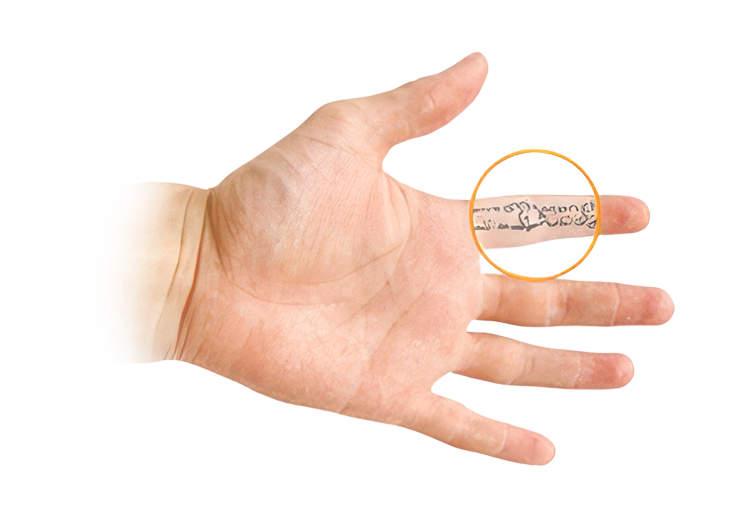
A fractured finger is a break in one of the bones of the finger. It is one of the most common injuries treated in emergency rooms - and one of the most frequently underestimated. Because the bones are small and the injury can seem minor, finger fractures are often dismissed by patients and clinicians alike: wrapped, taped, and left to heal on their own. This approach often sets the stage for lasting problems.
The bones of the fingers are called phalanges. Each of the four fingers contains three - the proximal phalanx (nearest the hand), the middle phalanx, and the distal phalanx at the fingertip. The thumb is the exception, with only two phalanges, proximal and distal, and no middle phalanx. A broken finger can involve any of these bones, and the location of the break - near a joint, in the shaft, or at the tip - strongly influences how it should be treated.
Most finger fractures are caused by trauma: a direct blow to the finger, a fall onto an outstretched hand, a workplace accident, or a sports injury. Because the fingers are constantly in use and relatively exposed, they are among the most vulnerable bones in the body to this kind of impact.
The hand is a precision instrument, and that is why these injuries deserve respect. Even a slight error in how a finger fracture heals - a few degrees of rotation, a small step-off in a joint surface - can lead to a finger that overlaps its neighbor when you make a fist, a stiff or weak grip, a visible deformity, or chronic pain. The features that make a fracture serious are often invisible without a proper exam and X-rays: rotation, angulation or displacement of the fragments, involvement of a joint surface, and instability. Left unaddressed, these injuries can heal in a poor position (a malunion) and result in stiffness, reduced grip strength, deformity, and long-term pain - and post-traumatic arthritis when a joint is involved. These complications are far easier to prevent than to correct, which is why a finger that may be fractured is best evaluated by an orthopedic hand specialist. Dr. Cohen specializes exclusively in the hand, wrist, forearm, and elbow, and is uniquely qualified to identify the fractures that look harmless but aren't.
-
Most broken fingers hurt, but the symptoms vary more than people expect. Some fractures are immediately and obviously painful, while with others you may still be able to move the finger and feel only a dull ache. Within five to ten minutes of the injury, you may also notice swelling, bruising, stiffness, and in some cases numbness.
Common warning signs include:
Pain, swelling, and bruising
Tenderness directly over the bone
Difficulty straightening, bending, or moving the finger
A visible bend, bump, or shortening
The finger crossing over an adjacent finger when you make a fist
Numbness, or a finger that looks pale or discolored
Just as important, a broken finger doesn't always follow the textbook - some fractures produce surprisingly few symptoms, and a finger that seems merely "jammed" can in fact be fractured or dislocated. A simple rule helps: if you press or squeeze along the bone and it hurts, the finger should be evaluated, regardless of how much swelling, bruising, or movement is present.
Seek prompt evaluation if you have an open wound over the injury, an obvious deformity, a finger that won't move or straighten, numbness, or pain and swelling that don't improve. While urgent care or an emergency room can provide an initial X-ray and splint, a hand specialist is best positioned to catch the subtle, function-threatening details - rotation, joint involvement, and instability - and to plan treatment that protects your long-term hand function.
-
A broken finger cannot be confirmed by appearance or symptoms alone - an X-ray is required to diagnose a fracture and define its exact pattern. Dr. Cohen begins with a thorough physical examination and takes X-rays in his office during the same visit, so the injury can be fully assessed and a treatment plan started without delay. The X-ray reveals the details that guide treatment: where the bone is broken, how many fractures are present, and whether the fragments have shifted out of alignment.
Treatment can vary greatly depending on several factors - the location of the break, the number of fractures, and whether the bone is displaced (the broken pieces have moved out of alignment). Simple, stable, well-aligned fractures are usually treated without surgery, using buddy taping or a custom splint to immobilize the finger, followed by a guided program to restore motion. More complicated breaks - particularly those involving displacement, rotation, joint surfaces, or instability - may require surgery to realign the bone and hold it in place with pins, screws, or plates. Most finger fractures achieve bony healing in roughly three to six weeks, though this varies with the injury and the patient, and recovering full motion and strength often takes longer.
Dr. Cohen is well known for his conservative approach and does not rush to surgery when non-surgical treatment will lead to the proper outcome. When surgery is the right choice, the goal is always the same: a finger that heals straight, moves freely, and works the way it did before the injury.
If you've injured a finger and want it evaluated properly the first time, Dr. Cohen offers expert, concierge-level care for hand and upper-extremity injuries in Westlake Village.
Beyond fractured fingers, Dr. Cohen also treats fractures of the hand, wrist, forearm, and elbow.
PATIENT STORIES
Real patients. Real stories. Hear their experiences.

PATIENT NAME
Procedure
WATCH INTERVIEW ➤
PATIENT NAME
Procedure
WATCH INTERVIEW ➤
PATIENT NAME
Procedure
WATCH INTERVIEW ➤
LET’S TALK
Our team is ready to deliver expert guidance and results. Let’s have a conversation about your injury or condition - and how we can help you heal.

