
FRACTURES
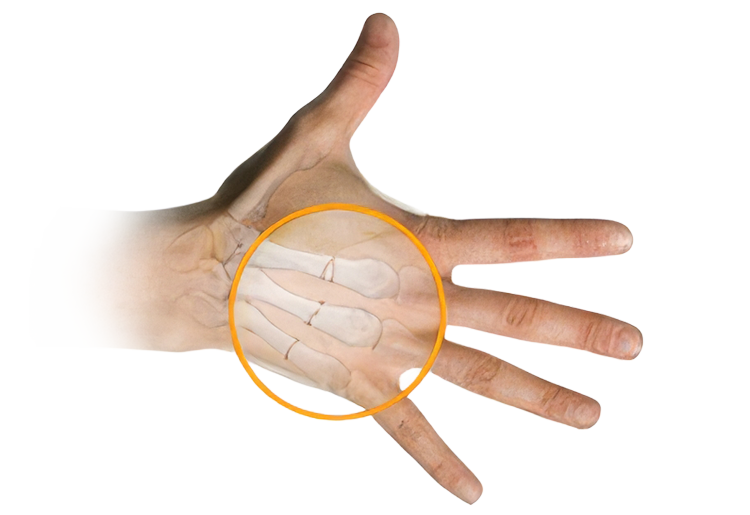
Hand fractures are the most common fractures of the skeleton. A broken finger may not seem like a big deal, but the bones of the hand must work precisely to perform their functions. Dr. Cohen has the experience and skill to evaluate and properly manage this type of injury.
-
The hand is an intricate structure of muscles, cartilage, tendons, nerves, and, of course, bones. Twenty-seven of them to be exact.Because of the hand's complexity, as well as the huge role it plays in our daily lives, it is particularly susceptible to injury. So it is not surprising that a hand fracture is one of the most common reasons for a trip to the emergency room.
The most frequently seen fractures include:
Scaphoid fractures. These are fractures of a bone in the wrist, frequently seen after the patient has fallen and attempted to stop the fall with an outstretched hand.
Metacarpal fractures. The metacarpals are the long bones in the palm of the hand that extend from the wrist up to the fingers. Fractures to the metacarpal bone that leads to the little finger are extremely common.
Phalanx fractures. The phalanges are the small bones in the fingers.
Wrist fractures. The most commonly broken bone of the wrist is the radius. Many people think that a fracture is different from a break, but they are the same. When a bone in the wrist is broken, there is pain, swelling, and decreased use of the hand and wrist. Often the wrist appears crooked and deformed.
Elbow fractures. Elbow fractures may result from falling onto an outstretched arm, a direct impact to the elbow, or a twisting injury. Sprains, strains, or dislocations may occur at the same time as a fracture.
Some fractures are simple, in which case the bone stays aligned. Others may involve displacement or shifting of the bone fragments. All types of fractures should be seen by an orthopedic hand specialist.
-
Fractures generally occur as the result of an injury, such as slamming your hand in a door, breaking a fall with your hand, or a direct blow to the hand. Pain and swelling are common symptoms, as well as difficulty with movement. There may be bruising and deformity as well (a crooked finger, for instance.) However, these findings are not always present and it is not always possible to tell where the break is, or how bad the fracture is, just by looking at it. If you suspect that you may have a fracture, it is important to see Dr. Cohen as soon as possible.
-
Diagnosis begins with a thorough physical examination and x-rays. Once Dr. Cohen has determined the nature of the fracture, he will be able to decide on a course of action. Simple fractures can usually be handled with a splint or cast. If there is a complicated break, it may be necessary to surgically insert screws or wires to hold the bones together while they heal. Dr. Cohen has extensive experience with all types of fractures, and prides himself on returning patients to maximal function.
PATIENT STORIES
Real patients. Real stories. Hear their experiences.

PATIENT NAME
Procedure
WATCH INTERVIEW ➤
PATIENT NAME
Procedure
WATCH INTERVIEW ➤
PATIENT NAME
Procedure
WATCH INTERVIEW ➤
LET’S TALK
Our team is ready to deliver expert guidance and results. Let’s have a conversation about your injury or condition - and how we can help you heal.

