
Osteoarthritis of the Hand and Wrist
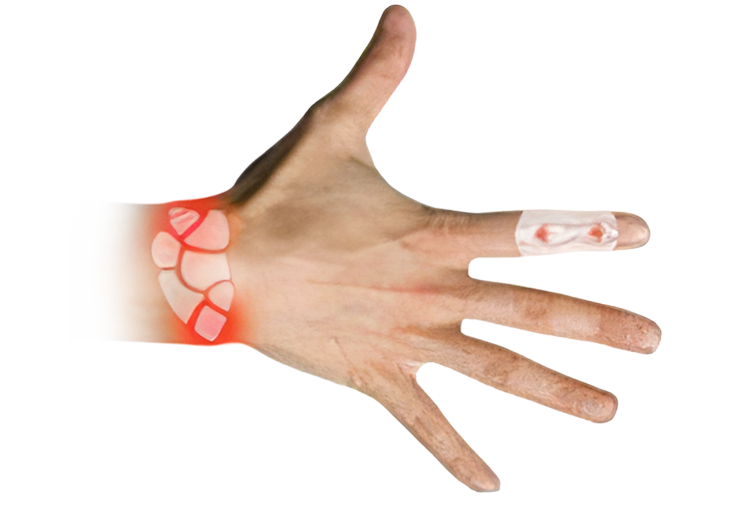
Osteoarthritis is one of the most common causes of hand and wrist pain. It develops when the smooth cartilage that cushions the ends of the bones gradually wears away, allowing bone to rub against bone. The result is pain, stiffness, swelling, and reduced grip strength that tend to build slowly over time.
-
Arthritis is a broad term for joint inflammation, and there are many different types. Osteoarthritis (OA) is by far the most common, and it is a frequent source of pain and stiffness in the hand and wrist. It is a slowly progressive, “wear-and-tear” condition in which the working surfaces of a joint break down over time.
In a healthy joint, the ends of the bones are capped by a smooth layer of cartilage that lets them glide against one another with almost no friction. The joint is enclosed by a thin lining called the synovium, or synovial membrane, which produces a slippery synovial fluid that lubricates and nourishes the cartilage.
In osteoarthritis, this cartilage gradually thins and wears away. As the cushioning is lost, the bones lose their protective gliding surface, and in advanced cases the exposed bone ends begin to rub directly against one another. The joint often responds by forming bony growths—called bone spurs, or osteophytes—around its edges. These spurs are part of why arthritic finger joints can become enlarged, stiff, and knobby in appearance.
In the hand and wrist, osteoarthritis tends to settle in a few specific joints:
The base of the thumb (the basal or CMC joint) – one of the most commonly affected sites, and a frequent cause of pain when pinching, gripping, or turning keys and jar lids.
The joints closest to the fingertips (the DIP joints), where firm bony bumps known as Heberden’s nodes may develop.
The middle joints of the fingers (the PIP joints), where similar bumps are called Bouchard’s nodes.
The wrist, where osteoarthritis is less common as a stand-alone problem and is often linked to a previous fracture or ligament injury.
-
The most common symptoms of hand and wrist osteoarthritis are pain and stiffness in the affected joints. Symptoms usually come on gradually and may also include swelling, a weakened grip, reduced motion, and a grinding sensation when the joint moves.
Common symptoms include:
A deep, aching joint pain that tends to worsen with use and ease with rest
Stiffness, often most noticeable in the morning or after a period of rest
Swelling, warmth, or tenderness in the affected joints
Difficulty gripping and grasping, which interferes with everyday tasks
A grating or grinding sensation, known as crepitus, when the joint moves
Pain is usually the symptom that prompts people to seek help. In osteoarthritis it is typically a deep, aching pain that worsens when the hand is used and eases with rest, though some people also describe a burning quality. Early on, the discomfort may come and go; over time it can become more persistent.
Stiffness is also common and is often most noticeable first thing in the morning or after the hand has been still for a while. In osteoarthritis this stiffness is usually brief, easing within roughly half an hour as the joint loosens up with gentle movement. As the condition progresses, gripping and grasping can become harder, making everyday tasks such as opening jars, turning keys or doorknobs, buttoning clothing, and writing more difficult.
Affected joints may also become swollen, warm, or tender, reflecting the low-grade inflammation that accompanies osteoarthritis. Over time, the joints can enlarge and lose some of their normal range of motion. Many people notice a grating or grinding sensation—called crepitus—as the roughened joint surfaces move against one another.
-
Hand and wrist osteoarthritis is diagnosed through a physical examination and X-rays. Treatment usually begins with non-surgical measures - such as medication, splinting, hand therapy, and activity changes - and surgery is considered only when these no longer relieve the pain.
Diagnosis
Diagnosis begins with a thorough physical examination. The affected joints are checked for tenderness, swelling, and bony enlargement, and your range of motion and grip strength are assessed. For arthritis at the base of the thumb, a simple maneuver sometimes called the grind test can help reproduce the pain and pinpoint the joint involved.
X-rays are the most useful imaging test for osteoarthritis. They can reveal the hallmark signs of the condition, including narrowing of the space where cartilage has worn away, bone spurs (osteophytes), and changes in the underlying bone. In some cases, additional tests—such as blood work—are used to rule out other causes of joint pain, including rheumatoid arthritis or gout.
Treatment
Treatment depends on which joints are involved, how severe the arthritis is, and how much it affects daily life. There is no cure for osteoarthritis, but a wide range of treatments can relieve pain, improve function, and help you stay active. Care almost always begins with non-surgical measures.
Although recognized for his surgical skill, Dr. Cohen is a firm believer in making full use of conservative, non-operative treatment plans before considering surgery whenever it is appropriate to do so. For hand and wrist osteoarthritis, these non-surgical options may include:
Medication – topical anti-inflammatory gels, natural supplements, anti-inflammatory medication, or acetaminophen to manage pain, and in some cases a corticosteroid injection into the joint for longer-lasting relief of a flare.
Splinting or bracing – a supportive splint to rest and stabilize the joint; for thumb-base arthritis, a thumb spica splint is often used.
Hand therapy – guided exercises and joint-protection techniques that help maintain motion and strength.
Ergonomic modifications – adaptive tools, built-up grips, and changes to how everyday tasks are done to reduce stress on the affected joints.
Lifestyle changes – activity modification along with heat or cold therapy to ease pain and stiffness.
When non-surgical care no longer controls the pain, surgery may be considered. The right procedure depends on the joint involved and the degree of damage. Surgical options may include:
Removing and reconstructing the thumb-base joint (trapeziectomy, sometimes combined with ligament reconstruction and tendon interposition), a common procedure for advanced thumb arthritis.
Joint fusion (arthrodesis), which permanently stabilizes a painful joint to eliminate motion at that joint and relieve pain.
Joint replacement (arthroplasty), in which a damaged joint is replaced with an implant to preserve movement.
Wrist procedures ranging from partial fusion to joint replacement, chosen according to the pattern and extent of the arthritis.
Whether the path is non-surgical or surgical, the goal of treatment is the same: to relieve pain, preserve hand function, and help you return to the activities that matter most. If hand or wrist pain is interfering with your daily life, an evaluation can identify the cause and the treatment options best suited to you.
PATIENT STORIES
Real patients. Real stories. Hear their experiences.

PATIENT NAME
Procedure
WATCH INTERVIEW ➤
PATIENT NAME
Procedure
WATCH INTERVIEW ➤
PATIENT NAME
Procedure
WATCH INTERVIEW ➤
LET’S TALK
Our team is ready to deliver expert guidance and results. Let’s have a conversation about your injury or condition - and how we can help you heal.

